Tuesday, December 14, 2010

Baby It's Cold outside!


Baby it’s cold outside... so instead bring the outdoors in this season! Here is my seasonal garden advice, tips on holiday decorating, advice on selecting a Christmas tree or other greens and a few gift ideas.

The obvious place to start is the Christmas tree. To choose a fresh cut tree, look for one with a healthy color and good fragrance. Run the tip of a branch between your thumb and forefinger, if no needles fall, you are in good shape. When you get the tree home, cut about 6” off the base of the trunk to allow it to ‘drink’ and get it into the stand where it can be watered. Don’t let it dry out! Some people swear by concoctions to keep the tree fresh longer such as watering it with “Sprite” or adding a cut flower food to the water.

A live trees should be kept indoors no longer than a week. Don’t let the root ball dry out when it is inside and water well when it goes out again. Before making the big climate change to the indoor or back outside, allow the tree a few days to adjust in a cool garage. Ideally you should plan ahead and have a planting hole dug for the tree before the ground freezes. Don’t forget other live tree options such as small holly trees and Dwarf Alberta Spruce to be used indoors or out.

Other ways to display your greens include wreaths, swags and garlands. We know to use traditional material such as evergreen boughs, holly, juniper berries and boxwood, but look around in your garden for other options such as magnolia leaves, ivy, red-twig dogwoods, winterberry and rose hips. These can be tucked into store bought wreaths or fashioned into your own swags. Even dried flowers, grasses and hydrangea blooms make seasonal additions to holiday arrangements.

If you are looking to give something different consider Poinsettia, Cyclamen, Orchids, fragrant Gardenia and Rosemary trees. Amaryllis is another traditional choice, but for the “Do-It-Yourself-Gardener” consider giving the bulb in a nice pot, perhaps with a pair of garden gloves and tied up with a holiday ribbon. There are also live arrangements done with ivy or small junipers. Already planted in a basket and garnished with a bow, they are a ready to go gift. Remember the ‘rules’ with any houseplant; keep the room at a consistent temperature, give them plenty of sunlight and water properly. I have found this particularly difficult to do with rosemary and gardenia so consider saving these for the advanced gardeners on your list!

What better way to bring the outdoors in for your favorite gardener than with a garden gift? This time of year a journal can inspire thoughts of the season to come and give a place to jot ideas when going through seed catalogs in early winter. A garden ornament, such as a statue, sundial or trellis can bring interest to a drab winter garden. Tuck a garden tool and gloves into a pair of clogs or give a gift of Burt’s Bees lotions and soaps that any garden weary hands would love.

Finally take time during the holiday season to not just bring the outdoors in, but to bring yourself outdoors! Most of all…Have a Happy Holiday.
-Sharon and Barry

Friday, December 10, 2010

Holiday Newsletter - 2010


Holiday Newsletter - 2010
(You can always find the latest Newsletter on our site)

Favorite Recipe:
Tom and Jerry


I love Egg Nog but there are several problems; the calories, the quantity and the risk posed by consuming raw eggs. Let me introduce you to the Tom & Jerry! This one-mug wonder is a favorite at the Buffalo landmark restaurant Schnabbles. You can easily mix up two mugs as a special treat to share.

Beat 1 egg white until it forms soft peaks, combine this with 1/4 cup of confectioners sugar and 1 egg yolk.

Heat 2 cups of milk

Spoon one-half of the egg mixture into each mug, add a splash of rum or brandy if desired, then top each mug with the heated milk, stir and enjoy!

Bringing the Outdoor In

Baby it’s cold outside so instead bring the outdoors in this season! The obvious place to start is the Christmas tree. To choose a fresh cut tree, look for one with a healthy color and good fragrance. Run the tip of a branch between your thumb and forefinger, if no needles fall, you are in good shape. When you get the tree home, cut about 6” off the base of the trunk to allow it to ‘drink’ and get it into the stand where it can be watered. Don’t let it dry out! Some people swear by concoctions to keep the tree fresh longer such as watering it with “Sprite” or adding a cut flower food to the water. Finally, recycle your tree. Many townships offer collection and mulching, or place it outdoors to provide shelter for wildlife. (I'll try to offer some tips for bird feeding later this winter.)


A live trees should be kept indoors no longer than a week. Don’t let the root ball dry out when it is inside and water well when it goes out again. Before making the big climate change to the indoor or back outside, allow the tree a few days to adjust in a cool garage. Ideally you should plan ahead and have a planting hole dug for the tree before the ground freezes. Don’t forget other live tree options such as small holly trees and Dwarf Alberta Spruce to be used indoors or out.


Other ways to display your greens include wreaths, swags and garlands. We know to use traditional material such as evergreen boughs, holly, juniper berries and boxwood, but look around in your garden for other options such as magnolia leaves, ivy, red-twig dogwoods, winterberry and rose hips. These can be tucked into store bought wreaths or fashioned into your own swags. Even dried flowers, grasses and hydrangea blooms make seasonal additions to holiday arrangements.


If you are looking to give something other than a poinsetta consider Cyclamen, Orchids, fragrant Gardenia and Rosemary trees. Amaryllis is another traditional choice, but for the “Do-It-Yourself-Gardener” consider giving the bulb in a nice pot, perhaps with a pair of garden gloves and tied up with a holiday ribbon. There are also live arrangements done with ivy or small junipers. Already planted in a basket and garnished with a bow, they are a ready to go gift. Remember the ‘rules’ with any houseplant; keep the room at a consistent temperature, give them plenty of sunlight and water properly. I have found this particularly difficult to do with rosemary and gardenia so consider saving these for the advanced gardeners on your list!


What better way to bring the outdoors in for your favorite gardener than with a garden gift? This time of year a journal can inspire thoughts of the season to come and give a place to jot ideas when going through seed catalogs in early winter. A garden ornament, such as a statue, sundial or trellis can bring interest to a drab winter garden. Tuck a garden tool and gloves into a pair of clogs or give a gift of Burt’s Bees lotions and soaps that any garden weary hands would love.


Finally take time during the holiday season to not just bring the outdoors in, but to bring yourself outdoors! Most of all…Have a Happy Holiday.


-Sharon and Barry


Seasonal Tasks


  • Lightly trim evergreens for use as holiday decorations.


  • Spray broadleaf evergreens with anti-dessicant if not already treated.


  • Remove snow fall from Arborvitea and other shrubs to prevent damage.


  • Snow may be piled on perennial areas but avoid accumulation on shrub.


  • Avoid using salt on on or near plants to prevent damage.


  • Clean and prepare tools for winter storage. Prepare snowblower.


  • Provide cover, seed and suet to attract a variety of birds.


  • Additional information can be found on Our Blog and weekly tips on Facebook

Saturday, December 4, 2010

Selecting a Christmas Tree

(Martin Shaw Potting Shed Tree - 2009)
Frank Gouin, retired head of the department of horticulture at the University of Maryland, College Park, knows his trees and how to keep them (and you) happy. Not only did he spend three decades advising the Maryland Christmas Tree Association, but he grows Christmas trees himself, on 6 acres at his southern Anne Arundel County farm. Here are tips for keeping your tree fresh.

Safety first It's best to avoid trees that, as a breed, dry out quickly and could become fire hazards. That should be the first consideration, Gouin stresses. The safest trees, he says, are Douglas firs ("even four weeks after being cut, they would not ignite"), Scotch pines and blue spruce. The worst, he says, are Fraser firs.

Buy early The main trick, Gouin insists, is to get a tree that's been cut down as recently as possible. A tree that's been leaning up against a stand somewhere for a couple of weeks, or lying on a flatbed, might not have much life left in it — especially since it might have been cut as long ago as October. "The most important thing is, get as fresh a tree as you possibly can," he says. "If you're going to go to a corner lot to buy a tree, you should go as soon as it opens up."

Cheap tricks Once you buy the tree, cut a couple inches off the bottom, to help clear sap and other bacteria that may have settled at the base and could prevent water from flowing up. At least at first, stick it in 100-degree water, to stimulate the flow of water up into the tree. When the tree is moved inside, repeat the process. And put some Floralife crystals (the stuff florists suggest for cut flowers) into the water.

Stay cool While it's outside, shade is important. "Keep it out of the sunlight completely," he says. "If it gets to be a hot day, spray it with water. That will help cool it down." When moved inside, "keep it away from radiator vents, places where it will get intense heat. Then it won't dry out very fast."

—Chris Kaltenbach, courtesy of the Baltimore Sun

Cutting your own Of course, if you want a really fresh tree, there's no substitute for going out and cutting it down yourself. Baltimore is ringed with Christmas tree farms; here are just a few. Be sure to call ahead for directions, hours, pricing details and whether you need to bring your own saw.

Noble Fir
Sturdy branches make this Pacific Northwest native a good choice if you have a lot of weighty ornaments. The tree has thick, silvery-green needles and limbs that stick straight out from the trunk, giving this fir a full, rounded appearance.

White Pine
This large blue-green tree grows throughout the East, to Ohio and parts of the South. It's often sheared to have a more narrow silhouette, but its dense look can obscure ornaments. The springy branches aren't good with bulky garlands or lights. White pine has very little aroma but is reported to result in fewer allergic reactions than some of the more aromatic species. Needle retention is good to excellent.

Concolor Fir
Indigenous to the West, this sweet-scented tree has a tall, narrow silhouette. The loosely spaced, bluish needles are great for showcasing ornaments. It's also called a white fir.

'Carolina Sapphire' Cypress
This southern dweller is naturally broad and has a strong scent of lemon and mint. It's very similar to the 'Blue Ice' cypress (and has similar drawbacks).

Nordmann Fir
The preferred Christmas tree in Europe, this evergreen is becoming increasingly popular in the United States. It's grown primarily in the Pacific Northwest and is prized for its fat pyramid shape and lush, dark-green foliage

Leyland Cypress
Feathery, dark-green to gray foliage sets apart this Christmas tree, the most popular one in the Southeast. The silhouette varies from tree to tree and can be tall and slender or squat and rounded. The species absorbs an unusually large amount of water; its stand needs to be refilled several times per day.

Balsam Fir
This classic northeastern Christmas tree is a near twin of the Fraser fir. Its long-lasting needles are a deep green, and the tree has a pyramid shape that culminates in a slender top. Plus, it retains a pleasing fragrance.

Douglas Fir
One of the most common holiday trees in the Pacific Northwest, this species has firm branches and soft, blue-green or dark-green needles that emit a fragrance when crushed. Light in weight, it can be easier to transport than other trees.

'Blue Ice' Cypress
A cultivar of the Arizona cypress, this silvery-blue tree has a citrus aroma and a narrow steeple shape. It's found in the Gulf states, Georgia, and South Carolina. The branches support small lights, tinsel, and a few ornaments, but nothing heavy.

Fraser Fir
A pair of silvery stripes on the underside of each needle distinguishes this aromatic tree from the nearly identical balsam fir. Found in high-elevation regions of the South as well as in the Northeast and Great Lakes states, it has strong, upturned branches that are ideal for holding ornaments.

Read more at Marthastewart.com: Holiday Handbook

Tuesday, November 23, 2010

A Happy Thanksgiving and All of the Trimmings

Wow - I've found a lot of garden material to post on our facebook page in the last few days! Unusual for this time of year, but it certainly helps to brighten these grey overcast days at the end of November. There is not much to be done outdoors so at least we can enjoy some good material. Here are some of the interesting links I have come across, think of it as a Thanksgiving menu with lots of goodies to choose from:

- First is the preview from a pictorial book featuring photographs from some of this summers Garden Conservancys Open Days Program. Beautiful shots.
http://www.blurb.com/bookstore/detail/1702882?ce=blurb_ew&utm_source=widget

- Food and flowers - sounds like a good holiday to me! Here are links to two pictorials from Garden Design Magazine to inpire your Thanksgiving table centerpiece! Garden Design is one of my favorite design resources and I am so happy that they are regularly poting articles and slide-shows!
http://www.gardendesign.com/
Power Flower:Six flower arrangements for your holiday table by our favorite floral designers. Six flower arrangements for your holiday table by our favorite floral designers.
and
Brooklyn Style: Autumn Floral Design with Kat Flower Garden Design
Claire Lui spends a day learning floral design with kat flower at the Brooklyn Flea market.

- Fishing for Food - An interesting and promising idea, I ran experiments on this topic for a project in college; Aquaponics, a method of growing fish and plants together, creates a closed loop system that some say could help to address food shortages in places without access to fresh produce. NBC's Anne Thompson reports.
http://www.msnbc.msn.com/id/21134540/vp/40203746

- Finally something good from a politician, Garden Design Magazine posted this pictorial tour of a Pennsylvania State Representatives sustainable home and landscape.
http://www.gardendesign.com/
Green Proving Ground Garden Design
Tour of a sustainable homestead in rural Pennsylvania

- Backyard Buffet? A whole new meaning for the term "outdoor kitchen" from NPR:
The Thanksgiving drill is pretty familiar: turkey, stuffing, pumpkin pie. But what would Native Americans have brought as sides? Turns out your backyard might have something tasty to contribute to this year's feast.
http://www.npr.org/
Try Foraging For Your Thanksgiving Meal : NPR
The Thanksgiving drill is pretty familiar: turkey, stuffing, pumpkin pie. But what would Native Americans have brought as sides? Turns out your backyard might have something tasty to contribute to this year's feast.

- No one does the holidays like Longwood. Imagine half a million brilliant lights strung with over 39 miles of cord. Lit trees the soar 75 feet, and dancing fountains that reach the sky. A 4.5-acre heated indoor Conservatory, featuring the richest floral displays imaginable. A Longwood Christmas is a celebration months in the making with hundreds of amaryllis, cyclamen, narcissus, literally thousands of poinsettias and special performances throughout the holidays. The season begins November 25, 2010 to January 9, 2011

- If you thought Christmas Trees were a lot of work to raise and prune, check out the topiary artistry of Pearl Fryar! If you would like to visit a topiary garden closer to home try Ladew Gardens in Monkton, MD. They are hosting a 'Gardeners Christmas' December 10-12.
http://www.pearlfryar.com/

Tuesday, November 16, 2010

It is the little things that make the difference

It is the little things that make the difference

One of our office buildings was re-painted this summer. Since we rent the space, we didn’t have any say in the selection of the contractor hired. The property manager spoke with several companies before choosing someone who met the minimum requirements; insurance and experience, and who offered the cheapest price. Now don’t get me wrong, price matters – but so do details.

The workers were nice enough, but inconsiderate of the businesses being run there. I never knew when they would show up for work, or not. Each day that they were there, they blocked my vehicle in. I had to ask them to move so I could leave for appointments….each and every day, and they were there for months, many more than expected, then left trash behind when they were done.

Now that fall has come and they are finally done, their lack of careful detail has become evident. The other day I began to insulate the windows for winter; clean the glass, put down the storms and latch the sashes. I was frustrated to find that most of the windows had been painted shut, some of the storms were put on incorrectly and the outside of each window was left filthy with paint smudges and debris from power washing. These are the sort of details that would have taken the contractor only minutes to address during the project – but now instead require hours for me to remedy.

This is not just a chance for me to vent but an opportunity to relate my first hand experience to potential customers as they interview contractors and compare bids for their landscape projects. Many times the reason for price differences are the quality of materials, methods of construction or size of the project being proposed, but other times it is simply the level of detail that one contractor offers. Materials, methods and size can all be adjusted for, unfortunately the level of detail is an intangible variable. Details don’t always affect the quality or safety of an installation, but they do affect the quality of life for those who live with the project and who, for a short period of time, have to live with the construction process and the contractors performing it.

The personal details critical to a landscape installation include, of course, being polite, keeping the area free of trash and debris, maintaining a consistent schedule and good communication about the progress, minimizing the inconvenience to homeowners and neighbors so that their vehicles, paths and views are not blocked, property lines and drainage are respected, lawn and plant damage are kept to a minimum, abiding by reasonable work hours and noise levels, keeping soil and mulch piles contained and cleaning up spills or tracks promptly. (I have a whole other entry on the responsibilities of being a great client including offering cool drinks and saying 'hello' to the crew!)

Construction and finish details are less obvious to most homeowners. They include consistent joints in stone work, cleaning up excess mortar from surfaces, making clean geometric cuts and corners, smoothly grading and seeding any tracks or disturbed areas. Some of them are even unseen. For example, we solder all of our underground low-voltage lighting wires and use silicone filled wire nuts to attach the fixtures. These are details that the homeowner will never see but that have a crucial role in the future function and longevity of the project just as a properly prepared base does. Polymeric sand used in patio joints, conduit installed beneath walkways and downspout extensions all offer similar hidden benefits.

To determine if a contractor regularly includes these details ask how they address the particulars, speak with their clients, see photos or visit completed projects and if possible visit a site under construction or ask to see progress shots so you can assess the conditions maintained during construction. Sometimes it is worth paying a little extra to know that the contractor you are working with has included these extras and offers the sort of customer service that will allow them to come back and address any problems.

Thursday, November 4, 2010

Form and Function


Form and function are the equivalent of beauty and intelligence to architecture. Of course any design element needs to perform its job well but a well-designed element does it beautifully.

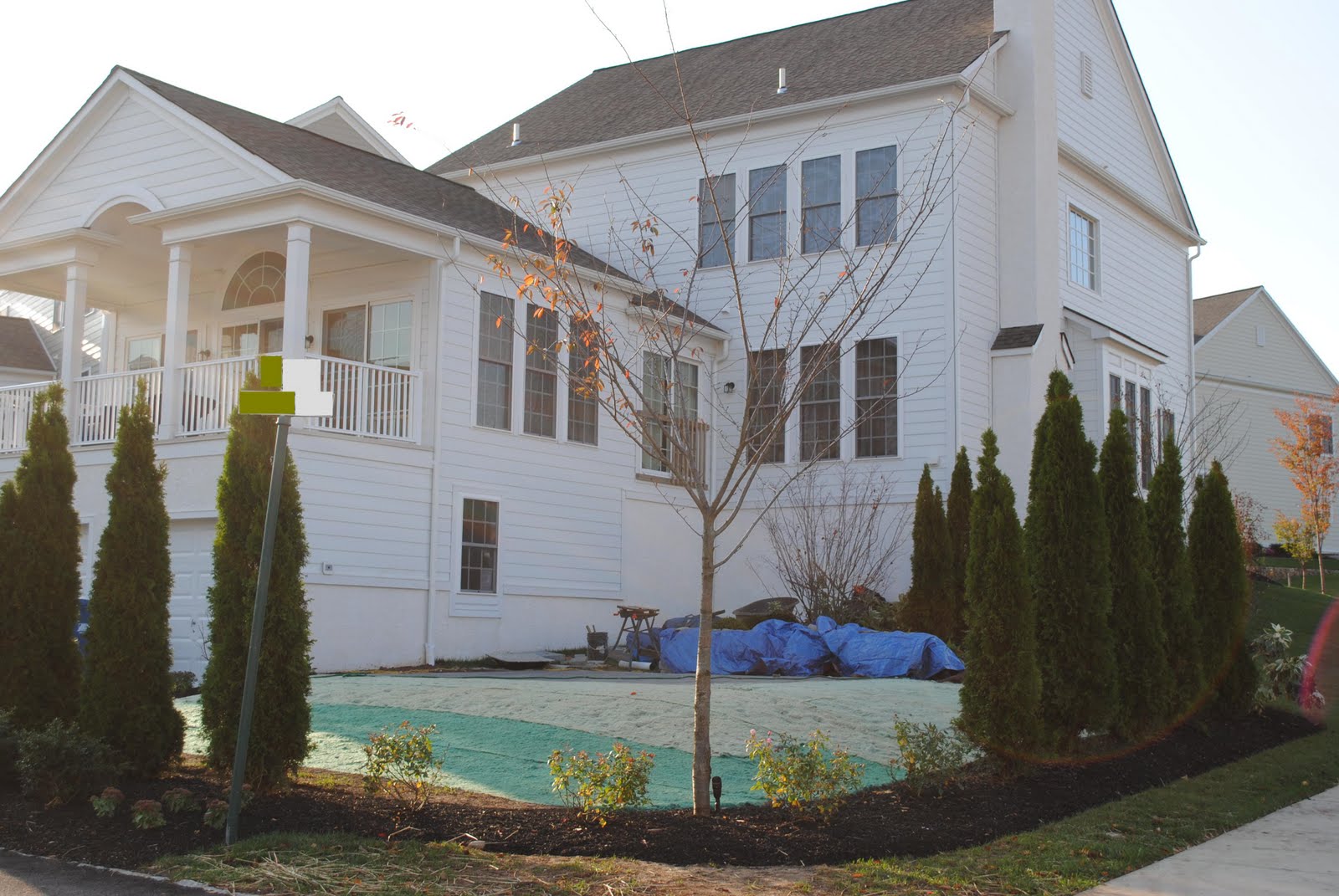
The Tripp family of Montgomery County contacted us at Martin Shaw, LLC needing to accomplish two important goals. Their home sits on the corner lot of a busy development and had no privacy. Lots in the neighborhood are small and the Tripps needed a way to access their backyard from a second story door while staying with-in the limited building envelope. They needed a staircase, patio and privacy but wanted an attractive entertaining space, garden and yard that their growing family could enjoy. I won’t lie; their design was a challenge. I played with a number of ideas, shapes and elevations, coming to dead ends several times after realizing my concept did not fit the requirements. It may be hard to believe but the smallest projects can often be the most difficult, but also offer the greatest satisfaction.

Sure enough, we finally came up with a solution that would give the homeowners an expanded grilling and entertaining space on the upper floor, then get them efficiently to a ground level patio, given privacy by some of their favorite trees and shrubs. To minimize the need for furniture surrounding the fire pit they wanted, we designed a seating wall to allow for efficient use of the small patio. Additional storage was created beneath the proposed deck. Since this landscape had to look as beautiful as it functioned we chose a random pattern bluestone patio complimented by bluestone veneer and caps on the wall. Landscape lighting creates safety while emphasizing texture in the stone wall and highlighting the shape of specimen trees.

The Tripps Georgian Colonial style home is built in a neighborhood of mixed American and European styles. Their homeowners association created guidelines designed to encourage individuality and an organic neighborhood feeling to the development. The HOA Manual of Design Guidelines requires that the landscape of each home remain appropriate to the architecture. Our design philosophy is to create landscapes appropriate to the home, but with a mandate to follow it was especially important to honor the traditional style of the house and allow for the eclectic style of their neighborhood. The bluestone patio, wall and all plantings reflected the traditional historical nature of their architecture. Many of the plants used are native to South Eastern Pennsylvania, while others are English garden classics used by generations of settlers to the area. Privacy is created by a hedge of Arborvitea. In consideration of drivers though, the hedge does not extend to the corner where it could obstruct the view of on-coming traffic.

To meet budget concerns the project has been broken two phases; the patio and plantings were completed this fall, the deck and steps are proposed for installation in the coming spring. The following photos illustrate our design and progress of the construction thus far. It may look simple now – but, just wait until the deck is complete and the plants have leafed out! With the Yoshino Cherry, Lilac, Peony and Serviceberry in spring bloom this little project will be a big attraction. Most importantly though our clients are enjoying it in the fall, even at this phase, when they can finally use that fire pit they have been waiting for.

Tripp Project Photos


(Yes, the grass was photo-shopped into this photo - it was dirt at the time - but the remaining image is untouched.)